





The Niqab is Not Fard
The ʿAwra of a Woman in the Maliki Madhhab
1 November 2026 · 106 footnotes · pp. 3–21 · 26 min
Introduction
In the Name of Allah, the Most Merciful, the Especially Merciful.
All praise is due to Allah, who perfected the religion, completed His favor upon His servants, and made this noble Shariʿah a light by which the hearts are guided and the affairs of creation are set aright. He sent His Messenger ﷺ with guidance and the religion of truth, to make it prevail over all ways, even if the corrupters dislike it. May abundant peace and blessings be upon him, his family, his companions, and those who follow their path with excellence until the Day of Judgment.
To proceed: the ʿawra of a free woman (the parts of the body she must cover) before a man who is not her mahram (a relative she may never marry) is her whole body, with two exceptions on which the Maliki school has spoken from its earliest books: the face and the hands. This booklet gathers what the scholars of the school said about these two: whether they are ʿawra, whether she must cover them, and what a man may and may not do when he sees them. Each text is traced to its source.
In short: in the Maliki school the face and hands of a woman are not ʿawra. She may uncover them before Muslim men who are not her mahrams, and covering the face is recommended, not obligatory, outside the special case of fear of fitna (temptation). The wives of the Prophet ﷺ were the exception: for them the veil was an obligation. The man, for his part, must lower his gaze, and may not look at her with desire.
The texts quoted here come from every period of the school: from Imam Malik and his early companions, through the great scholars of Iraq, al-Andalus and the Maghrib, to the commentators on Khalil ibn Ishaq's al-Mukhtasar, the text on which the later school gives its fatwa (a scholar's formal ruling). Where the scholars disagreed, or where a text seems to point the other way, it is quoted in full and answered from within the school.
Written by, ʿAli ʿAbd Allah al-Maliki
Founder of Maktabah Wasatiyyah
Germany
21 Jumada al-Ula 1448 AH, corresponding to 01/11/2026
A – The Ruling in the Words of the Scholars
1. The early authorities
Al-Qadi ʿAbd al-Wahhab, the great Maliki of Baghdad, said: "A woman's face and hands are not ʿawra, and a man who intends to marry may look at them. This was also the view of Abu Hanifa and al-Shafiʿi. Some said: they are ʿawra like the rest of her body and may not be looked at."1
He also said: "The principle here is that a woman may not touch the body of a non-mahram man, nor may a man touch the body of a non-mahram woman. … This is permitted only because looking at the face and hands is allowed, whereas everything else of the woman is ʿawra, which a non-mahram man may neither look at nor touch."2 And against those who make the face ʿawra: "The whole body of the woman is ʿawra except her face and hands — contrary to the one who said she may not uncover her face and hands, namely Ahmad ibn Hanbal. … Also, she is obliged to uncover them in ihram; had they been ʿawra, she would not be permitted to uncover them, just as with the rest of her body."3
Ibn ʿAbd al-Barr, the hafiz of al-Andalus, said in answer to the one who held that everything of a woman is ʿawra, even her nail: "This statement of Abu Bakr lies outside the views of the people of knowledge, because the scholars agree that a woman may pray the obligatory prayer with her hands and face uncovered, touching the ground with them; and they agree that she does not pray wearing a niqab, nor need she wear gloves in prayer. This is the clearest proof that these parts of her are not ʿawra. Anyone who looks at her without suspicion or anything objectionable may look at them. As for looking with desire, it is forbidden even to gaze at her with desire over her clothes — so how much more at her face when it is uncovered?"4
Ibn Muhriz, as Ibn ʿArafa transmits from him, said: "a woman's face is not ʿawra according to Malik and others."5 And as Ahmad Zarruq quotes him: "One may look at a non-mahram woman without necessity, provided one does not intend pleasure. He said: and looking at her face and hands is permitted by agreement."6
Al-Qadi ʿIyad of Ceuta said, commenting on the hadith of the sudden glance: "In all of this, according to the scholars, there is proof that it is not obligatory for a woman to cover her face; that is only recommended and a sunna for her, while the man must lower his gaze from her. … There is no disagreement that the obligation to cover the face was specific to the wives of the Prophet ﷺ from the time the hijab was revealed."7
Al-Maziri, as ʿIyad quotes him, said: "Covering is a fine sunna for women, while the hijab was an obligation on the wives of the Prophet ﷺ."8
2. The commentators on Khalil
Khalil, in his commentary on Ibn al-Hajib, explained the line "The ʿawra of the free woman is all but the face and hands" with the words: "This is in relation to a man."9 His student Bahram al-Damiri said of the Mukhtasar's wording "And before a non-mahram man: all but the face and hands": "that is, the ʿawra of the free woman in relation to a non-mahram man is all of her except the face and hands."10
Al-Dardir, whose commentaries on Khalil are a main basis for fatwa, said: "The ʿawra of the free woman before a non-mahram man — that is, one who is not her mahram — is the whole body 'except the face and hands'. As for these two, they are not ʿawra, even if she must cover them for fear of fitna."11
Al-Dasuqi, in his gloss on al-Dardir, said: "'Except the face and hands': that is, these two are not ʿawra and may be looked at — the back and the palm of the hand alike — on condition that no fitna is feared from looking and that the look is without intent of pleasure; otherwise looking at them is forbidden."12
Al-Kharshi said: "… except the face and hands, front and back, which may be looked at without pleasure and without fear of fitna, without any excuse, even if she is young."13
Al-Zurqani said: "As for the face and hands, front and back, he may see them uncovered, even if she is young, without any excuse such as testimony or medical need — unless fitna is feared or pleasure intended, in which case it is forbidden."14
Mayyara of Fez said: "The ʿawra of the free woman before a non-mahram man is her whole body except the face and hands, which are not ʿawra. … The prohibition on looking at them is only for fear of fitna, not because they are ʿawra."15
Al-Tataʾi said the same: "the face and hands … are not ʿawra in relation to prayer; the prohibition on looking at them is only for fear of fitna, not because they are ʿawra."16
3. Other works
Abu al-ʿAbbas al-Qurtubi, in his commentary on Sahih Muslim, said: "There is no disagreement that these [the private parts] of a woman are ʿawra before women and men; and that the free woman is ʿawra, except her face and hands, before men who are not her mahrams."17
Al-Nafrawi, commenting on the Risala, said that the author "states in the chapter on covering the ʿawra that the face of a non-mahram woman is not part of it; looking at it is forbidden only in a particular case, namely when pleasure is intended or fitna is feared."18
Al-Rajraji said in his commentary on al-Mudawwana: "there is no disagreement that a woman's face is not ʿawra."19
4. The definition in the books of fiqh
The books of fiqh define the free woman's ʿawra in the same words, most often in the chapter on prayer.
Ibn al-Qassar of Baghdad said: "According to Malik (may Allah have mercy on him) and al-Shafiʿi, the free woman is wholly ʿawra; she may not uncover anything but her face and hands."20
Al-Qadi ʿAbd al-Wahhab, after saying that the ʿawra "must be covered at all times from the eyes of people", said: "The free woman's whole body is ʿawra except the face and hands, so she must cover all of it apart from what we have mentioned."21
Ibn ʿAbd al-Barr said: "The free woman is wholly ʿawra, except what she may not cover in prayer and hajj, namely her face and hands. … This is the clearest proof that nothing of her face and hands is ʿawra."22
Ibn Shas said: "As for the first category of the second kind [free women], their whole bodies are ʿawra except the face and hands."23 Al-Qarafi quoted him in al-Dhakhira,24 and Ibn Rushd al-Hafid said: "Most scholars hold that her whole body is ʿawra except the face and hands."25
Ahmad Zarruq, commenting on the Risala, said: "Rather, her whole body, since all of her is ʿawra, even a single hair, except the face and hands."26
B – The Basis of the Ruling
1. "Except what appears of it"
Allah says: "And tell believing women that they should lower their glances, guard their private parts, and not display their charms beyond what [it is acceptable] to reveal (illa ma zahara minha, lit. 'except what appears of it'); they should let their headscarves fall to cover their necklines" [al-Nur 24:31].
Ibn ʿAbd al-Barr said: "The jurists in this matter follow the view of Ibn ʿAbbas and Ibn ʿUmar. This, then, is what has come concerning the woman and the ruling on her covering, both in her prayer and outside it."27 That view is the one al-Baji reports: "Saʿid ibn Jubayr narrated from ʿAbd Allah ibn ʿAbbas: 'except what appears of it' [al-Nur 24:31] — the face and the hands. ʿAtaʾ held the same, and Ibn Bukayr reported that it is the view of Malik and others."28
Ibn al-ʿArabi of Seville said: "There is disagreement over the 'apparent adornment', with three views … The third: that it is the face and hands … The correct view is that it is, in every respect, [the adornment] in the face and hands, for that is what appears in prayer and — as an act of worship — in ihram, and it is what appears by custom."29
Al-Qurtubi, the Qurʾan commentator, said: "since the face and hands usually appear — both by custom and in worship, that is, in prayer and hajj — it is fitting that the exception refer to them."30
Al-Maziri gave the reason: "Ibn al-Jahm said: [this is] because she needs to show these two limbs in dealings, in taking and giving, so necessity called for excepting them."31
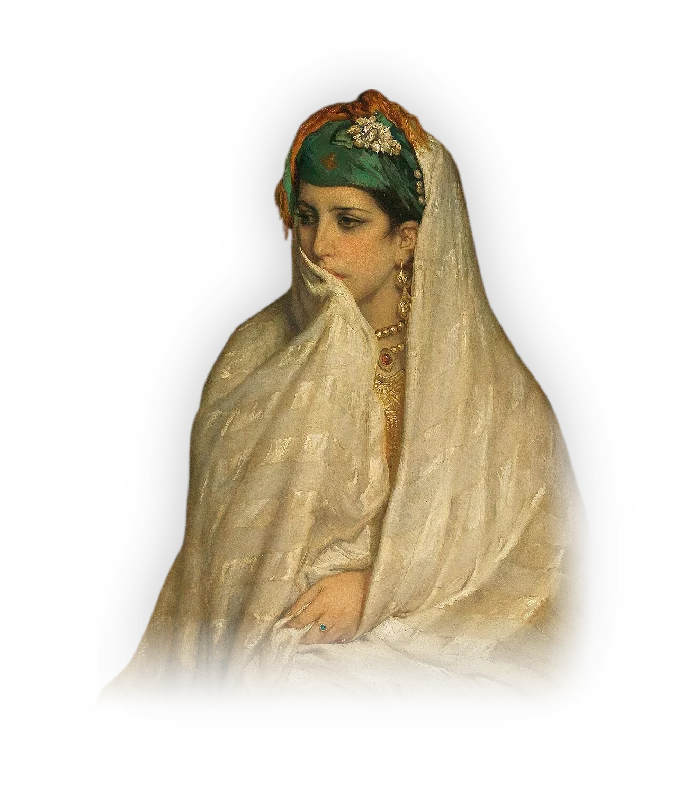
Ibn al-Qattan of Fez, who wrote the fullest Maliki work on the rules of looking, concluded after weighing every proof: "On this basis one must hold what these apparent texts jointly show and mutually support: that a woman may show her face and hands. But one must except from this what must certainly be excepted: if she intends by showing them to display herself (tabarruj) and show off her beauty, this is forbidden. What is permitted to her, then, is only to show what by custom is visible while she goes about her affairs and her daily work; she is not required to keep this covered — unlike what is customarily covered … such as the chest and the stomach."32
He found the same meaning in the next words of the verse: "This meaning we have given the verse — that what appears is the face and hands — is confirmed by the words that follow directly: 'they should let their headscarves fall to cover their necklines' [al-Nur 24:31]. For it is understood from this that earrings and necklaces might, while their faces were showing, escape their care to keep them covered and so become exposed. So they were ordered to draw their khimars over their necklines, so that none of that would show — except the face, which by its nature shows while one goes about one's affairs, unless it is covered deliberately and with effort and hardship; and likewise the hands."33
2. Prayer
A woman prays with her face and hands uncovered, and the scholars took this as proof that they are not ʿawra before others either. Ismaʿil al-Qadi, the Maliki judge of Baghdad, as ʿIyad quotes him, said: "This is the apparent meaning, because in prayer a woman must cover every part of herself that strangers do not see, except her face and hands. This shows that these are among what strangers may see. It is the view of Malik."34
ʿIyad used the same argument: the face "is not ʿawra according to Malik and the people of knowledge, since she shows it in prayer."35
3. Ihram
In ihram a woman may not wear the niqab or gloves, and Malik left covering to her own wish. Ibn al-Qasim said: "Malik used to allow a woman to let her cloak hang down from above her head over her face if she wished to be covered; if she did not wish to be covered, she should not let it hang down."36
Ibn Yunus of Sicily recorded: "The basis for this is his saying ﷺ, 'A woman's ihram is in her face,' and his forbidding women to wear the niqab in ihram. Since this is established, she may not cover her face — unless there is beauty from which fitna is feared, in which case she may let a cloth hang down over it. … As for the hands, she must leave them uncovered up to the wrists … because it is a limb that is not ʿawra in her."37
Khalil put it in the Mukhtasar: "Ihram forbids the woman to wear gloves or to cover her face — except to conceal herself [from men], without pinning or tying; otherwise a fidya is due."38
C – Proofs from Malik and the Sunnah
1. Malik's own words
In al-Mudawwana, on a man who has pronounced zihar (an oath declaring his wife unlawful to him): "I said: 'If a man pronounces zihar against his wife, must she withhold herself from him?' He said: 'Malik said: Yes, she must withhold herself from him.' He said: 'And it is not proper for him to look at her hair or her chest.' He said: 'I asked Malik: May he look at her face? He said: Yes — and others besides him may also look at her face.'"39
In al-Muwattaʾ: "Malik was asked whether a woman may eat with a man who is not her mahram, or with her slave boy. Malik said: 'There is no harm in that, if it is done in the way customarily known for a woman to eat with men.' He said: 'A woman may eat with her husband and with others whom he eats with, or with her brother, in the same way.'"40
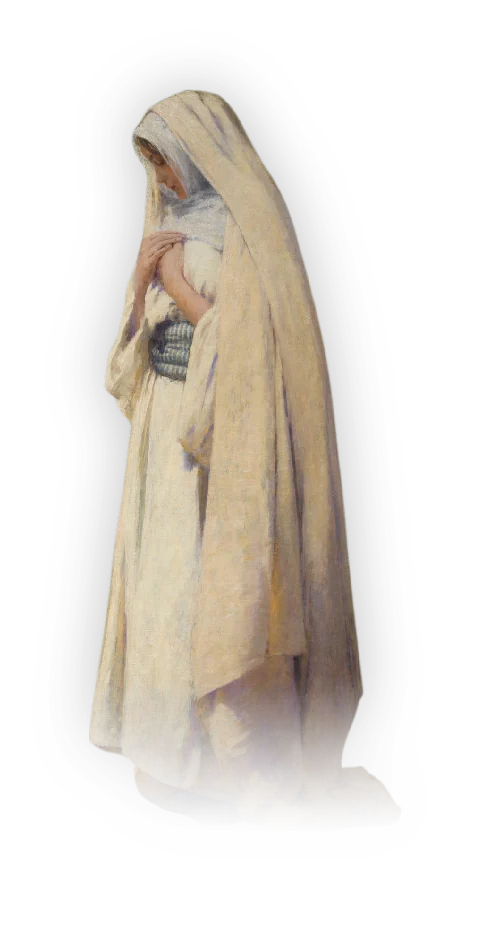
Al-Baji of al-Andalus explained: "His words … imply that a man may look at a woman's face and hands, because these appear when she eats with him."41 Ibn al-Qattan said: "It contains permission for her to show her face, palms and hands to a non-mahram man, since eating cannot be imagined otherwise; and al-Baji kept it on its apparent sense."42 Al-Abhari, as al-Baji quotes him, added the condition: "Malik said this only of a woman eating with someone in whose company she is safe from fitna."43
2. The tayammum of a dead woman
Ibn Abi Zayd al-Qayrawani, the author of the Risala, said: "A woman who dies on a journey with no women and no mahram man with her: let a man perform tayammum (dry ablution) on her face and hands."44 Ibn al-Jallab said the same.45
Al-ʿAdawi explained why: "'Let a man' among them 'perform tayammum on her face and hands' up to the wrists only, because they are not ʿawra, so he may look at them without desire — unlike what lies beyond the face and hands … which is ʿawra and may be neither uncovered nor touched."46
Khalil said: "Because her forearm is ʿawra, unlike her face and hands, as shown by her showing them in prayer and ihram. Each of them may look at the other's face — even though that is forbidden in life — because of necessity."47 By "forbidden in life" he means looking without need, as section G explains.
3. Proposal, testimony and buying and selling
Al-Qadi ʿAbd al-Wahhab said: "Whoever wishes to marry a woman may look at her face and hands — contrary to those who forbade this altogether."48
Ibn Rushd al-Jadd, the judge of Cordoba, said: "As for a man looking at a woman's face with her knowledge, without catching her unawares, when he wishes to marry her: Malik permitted it, just as he may look at her face when testifying for or against her. … Malik's view is the correct one."49
Al-Bannani explained why only these two may be seen: "For they permitted looking only at what is not ʿawra, namely the face and hands; everything else is ʿawra."50
Ibn Siraj, the chief judge of Granada, was asked about women who come out to buy and sell with men with their faces uncovered. He answered: "A woman buying and selling with men, or hiring them for work, and dealing with this herself out of necessity and need, is permitted, provided there is no corruption, no suspicion, no being alone together and no inclination towards wrongful desire. Uncovering her face and hands in doing so does no harm, just as she uncovers them in prayer. … The school of Malik (may Allah be pleased with him) is that a woman may uncover her face and hands before a non-mahram man, but in the manner described."51
4. The woman of Khathʿam
During the Farewell Hajj a woman of Khathʿam came to ask the Prophet ﷺ a question while al-Fadl ibn ʿAbbas was riding behind him. Al-Fadl began to look at her and she at him, and the Prophet ﷺ turned al-Fadl's face to the other side.52
Ibn Battal, the Andalusian commentator on al-Bukhari, said: "Allah commanded the lowering of the gaze from what is unlawful only so that the gaze would not become a means to fitna; when fitna is not feared, looking is permitted. … It also shows that the veil (hijab) is not an obligation on the believing women in every state, as it is on the wives of the Prophet ﷺ. Had it been an obligation on all women, the Prophet ﷺ would have ordered the woman of Khathʿam to cover herself, and would not have turned al-Fadl's face away from hers; rather he would have told him to turn his gaze away and taught him that this was his duty. He turned his face away at the moment fitna was feared, and left it before then. This hadith shows that the believing women's covering of their faces from those who are not their mahrams is a sunna, since they agree that a woman may show her face in prayer, and that strangers see it there."53
Ibn al-Qattan said: "the Prophet ﷺ did not command them — or her — to wear the niqab, but left her as she was, though she was such that one looking at her could be tempted by her. He did not address her, but addressed the one looking, who was taking pleasure in the beauty of her face."54
5. The sudden glance
Jarir ibn ʿAbd Allah asked the Prophet ﷺ about the sudden glance, and he told him to turn his gaze away.55 It is on this hadith that ʿIyad based his words quoted in section A: the man must lower his gaze, and covering the face is a sunna for her, not an obligation.
D – The Face and the Hands
1. Front and back, up to the wrists
The "hands" (al-kaffan) are the hands to the wrists, front and back. Al-Dasuqi said "the back and the palm of the hand alike", and al-Kharshi and al-Zurqani both said "front and back".56 Ibn Yunus and al-ʿAdawi set the limit at the wrists,57 and Ibn Siraj said: "the adornment meant is the face and the hands up to the wrists."58
2. What is not included
The forearm is not included. Khalil said: "her forearm is ʿawra, unlike her face and hands."59
The hair is not included. Al-Dardir said her ʿawra before a non-mahram man is "all of her body, even her forelock",60 and al-Kharshi and al-Zurqani said "even her hanging locks and her forelock".6162
The feet are not included in the relied-upon position. Al-Hattab reports a view that adds the feet: "Al-Ubbi said, from al-Qadi ʿIyad: and it was said, all except the face, the hands and the feet."63 The Mukhtasar and its commentators did not adopt it.
3. Before a non-Muslim man
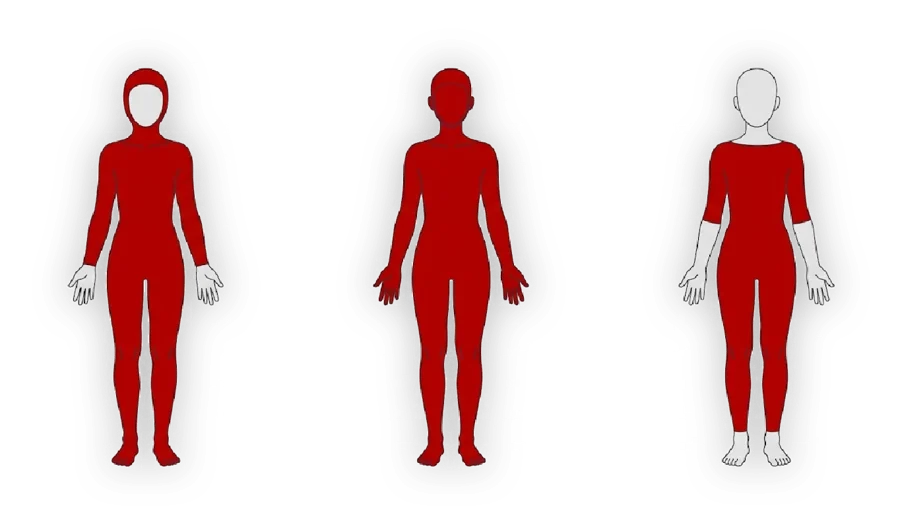
The later commentators on Khalil add a restriction: the ruling is before a Muslim man. Khalil's own words are only "before a non-mahram man", but al-Dasuqi and al-Sawi explain this as "a Muslim, whether free or a slave". Al-Dardir said: "[The ʿawra] of a free woman before a non-mahram Muslim man is 'all but the face and hands', of her whole body, even her forelock, even if no pleasure is felt. As for a non-mahram non-Muslim man, it is her whole body, even the face and hands."64
Al-Zurqani said the same, and excepted her own slave: "We said 'Muslim' to exclude a non-Muslim other than her own slave, for her ʿawra before him is her whole body, even the face and hands."65
The earliest Maliki statement of this that we have found is by Ibn al-Hajj, writing about non-Muslim doctors. He argued from the case of non-Muslim women: "It has already been stated that a Muslim woman may not show anything of her body to a Christian or Jewish woman; if this is so with regard to their women, then what of their men?" He allowed it only in need: "this [uncovering for a doctor] is only where there is necessity; and there is no necessity calling for treatment by a non-Muslim when a Muslim doctor is available, so it is forbidden."66
The rule about non-Muslim women goes back to the words "or their women" in al-Nur 24:31. Al-Qurtubi said: "'Their women' means Muslim women … Ibn ʿAbbas said: It is not lawful for a Muslim woman to be seen by a Jewish or Christian woman, lest she describe her to her husband. On this question the jurists disagree."67
Two of the later scholars explained that this prohibition does not make the face ʿawra. Al-Zurqani said that it is forbidden for her to uncover before a non-Muslim woman, "since the prohibition of uncovering does not entail that it is ʿawra — just as it is forbidden to uncover anything of her in the presence of a dhimmi man other than her own slave."68
Al-Amir said of the non-Muslim woman: "the prohibition is incidental, not because it is ʿawra … From this, the prohibition before the non-Muslim man himself is stronger."69
The earlier authorities quoted in this booklet speak only of "the non-mahram man" or of "strangers", without this distinction. Ibn Siraj's fatwa in section C was given about sellers "from the Muslims and from the dhimmis" alike, and made no distinction between them.70
4. Before her mahram men
Before her mahram men she may show more. Al-Dardir said of the free woman with a mahram man: "so it is not permitted to look at the chest, the back, the breast or the shin, even without pleasure, unlike the extremities: the neck, the head and the top of the foot."71 Al-Kharshi defined the extremities as "what is above the top of the chest (including the hair of the head), the feet and the forearms."72
E – Objections and Their Answers
1. "He is not to see her face"
The objection: In al-Mudawwana, Malik said of a woman whose husband denies having divorced her three times: "He is not to see her hair, her chest or her face."
The answer: this is about looking with desire. ʿIyad said: "some said: the apparent meaning is that a non-mahram man may not see the face of a non-mahram woman. Yet the face is not ʿawra according to Malik and the people of knowledge, since she shows it in prayer; and in the chapter on zihar there is the opposite. So this apparent meaning is not what is intended here. … What he means here is that she should not show it to him, because he looks at it in the way of pleasure; so she must not let him, nor give him any way to it, as far as she can. Likewise, a non-mahram man's looking at it in this way is not permitted, by consensus."73
Ibn Muhriz said the same: "He [Malik] barred him from seeing her face only where the aim is pleasure, as with a non-mahram man, and not otherwise."74 And al-Rajraji: "Malik forbade her to let him see her face, meaning to see it with pleasure … and there is no disagreement that a woman's face is not ʿawra."75
2. "Make their outer garments hang low over them"
The objection: Allah says: "Prophet, tell your wives, your daughters, and women believers to make their outer garments hang low over them so as to be recognized and not insulted" [al-Ahzab 33:59]. Ibn Rushd al-Hafid named this as the proof of those who make the face ʿawra.76
The answer: Ibn al-ʿArabi recorded both readings of the verse — that the garment covers the head, or that it covers the face — and then said: "The apparent sense is that heavy covering removes recognition; so this indicates … that He intended to distinguish them from slave women, who walked about bareheaded or with a single head-covering, and whom men would accost, uncover and speak to."77
Khalil said the same: "the foolish were in the habit of accosting slave women, and ʿUmar (may Allah be pleased with him) feared that the two would be confused and the foolish would accost free women, making the fitna greater. This is the meaning of His words 'so as to be recognized and not insulted' [al-Ahzab 33:59], that is, so that they are distinguished from others by their mark."78
Ibn al-Qattan answered the objection in full: "this drawing-down can be explained in a way that does not contradict what we have said, namely that it means they draw their outer garments over themselves so that necklaces and earrings do not show — like His words 'they should let their headscarves fall to cover their necklines' [al-Nur 24:31]. For the drawing-down commanded is unqualified, applying to anything that may be called drawing-down; so if we apply it to any one thing that can be called drawing-down, the command is discharged by it. … Moreover, it has been said of the verse that it came only to distinguish free women from slave women."79
For fairness: ʿIyad also records the reply made to the hadith of the woman of Khathʿam, that "this was before the revelation of the verse on drawing down the outer garments and covering."80 The texts of the school above show that, even so, they did not read the verse as making the face ʿawra.
3. "From behind a screen"
The objection: Allah says: "When you ask his wives for something, do so from behind a screen" [al-Ahzab 33:53]. On this verse Ibn al-ʿArabi wrote: "The woman is wholly ʿawra — her body and her voice — so none of that may be exposed except for necessity or need."81
The answer: the verse is about the wives of the Prophet ﷺ, and the school held that the veil was an obligation for them alone. ʿIyad said: "There is no disagreement that the obligation to cover the face was specific to the wives of the Prophet ﷺ."82 Al-Maziri and Ibn Battal said the same.8384 Ibn al-ʿArabi himself, on al-Nur 24:31, called the face-and-hands view "the correct view".85 And the school did not hold that her voice is ʿawra. Ibn al-Mawwaz said, as al-Lakhmi quotes him: "Her speech is not like any part of her body. … The wives of the Prophet ﷺ were commanded to use the screen, yet their speech was heard and hadith was written down from them."86
4. "Are you two blind?"
The objection: the hadith of Umm Salama, in which the Prophet ﷺ told two of his wives to veil from the blind Ibn Umm Maktum and said: "Are you two blind? Do you not see him?"87
The answer: al-Baji said: "Nabhan, the freedman of Umm Salama, is unknown, and nothing is narrated from him except this hadith and one other. … Moreover, Abu Dawud al-Sijistani said that Nabhan's hadith is specific to the wives of the Prophet ﷺ. … The more apparent view to me is that the hadith is not established."88
5. "Strive to conceal everything that is adornment"
The objection: Ibn ʿAtiyya, as al-Qurtubi quotes him, said: "It seems to me, from the wording of the verse, that a woman is commanded not to display, and to strive to conceal, everything that is adornment. The exception is for what appears through the necessity of unavoidable movement, attending to some matter, and the like."89
The answer is al-Qurtubi's, given immediately after: "I say: This is a good view, except that, since the face and hands usually appear — both by custom and in worship, that is, in prayer and hajj — it is fitting that the exception refer to them."90
6. "The woman is ʿawra"
The objection: the hadith "The woman is ʿawra; when she goes out, Satan looks out at her [with hope]."91
The answer: Ibn al-Qattan cites this hadith and accepts it, and still concludes that she may show her face and hands.92 The hadith speaks of the woman as one to be guarded when she goes out; it does not settle what of her may be seen.
F – Covering for Fear of Fitna
1. Not because the face is ʿawra
Where covering becomes obligatory, the school says it is because of fitna, not because the face is ʿawra. Al-Dardir said: "If fitna is feared from a slave woman, covering what is beyond her ʿawra becomes obligatory because of the fear of fitna, not because it is ʿawra; and the same is said of parallel cases, such as covering the free woman's face and hands."93 Khalil said: "Know that if fitna is feared from a slave woman, covering becomes obligatory in order to ward off fitna, not because it is ʿawra."94
2. Must she then cover?
On this the later scholars disagreed. Al-Dasuqi reported their positions: "Is she then obliged to cover her face and hands? This is the view of Ibn Marzuq, who said it is the well-known position (mashhur) of the school. Or is she not obliged, the duty being only on the man to lower his gaze? This follows from what al-Mawwaq transmits from ʿIyad. Zarruq, in his commentary on al-Waghlisiyya, distinguished between the beautiful woman, for whom it is obligatory, and others, for whom it is recommended."95
Those who held that she must cover include al-Qadi ʿAbd al-Wahhab. Al-Hattab said: "Know that if fitna is feared from the woman, she must cover her face and hands. Al-Qadi ʿAbd al-Wahhab said this, Shaykh Ahmad Zarruq transmitted it from him in his commentary on the Risala, and it is the apparent sense of al-Tawdih."96 Zarruq said: "if she is a woman who causes fitna, she must cover."97 And Ibn Khuwayz Mandad, as al-Qurtubi quotes him, said: "If a woman is beautiful and fitna is feared from her face and hands, she must cover them; if she is old or unattractive, she may uncover her face and hands."98
On the other side is ʿIyad's statement that covering is only recommended "while the man must lower his gaze from her."99
Both positions agree that the face is not ʿawra. The disagreement is only about a duty that arises from fear of fitna, and that duty depends on the woman and the situation.
G – The Man's Duty to Lower His Gaze
1. What the gaze is lowered from
ʿIyad divided the matter: "Lowering the gaze is obligatory in every case for some things, such as the ʿawra and the like; and for what is not ʿawra it is obligatory in some cases and not others: one must lower the gaze except for a valid purpose, such as testimony, examining a slave woman for purchase, looking at a woman for marriage, or a physician's examination, and the like."99
Ibn Battal said that the same hadith shows that the verse on lowering the gaze is an obligation "with regard to what is other than the face", and "that lowering the gaze from everything forbidden, and from all that may lead to fitna, is obligatory."100
2. Looking with desire
Looking with desire is forbidden in every case. Ibn ʿAbd al-Barr said: "it is forbidden even to gaze at her with desire over her clothes — so how much more at her face when it is uncovered?"101 And al-Dasuqi made the permission conditional on "that no fitna is feared from looking and that the look is without intent of pleasure; otherwise looking at them is forbidden."102
3. Looking at a young woman without need
The Risala says: "There is no sin in a first, unintended glance, nor in looking at a mutajalla (an elderly woman), nor in looking at a young woman for a valid reason such as testimony against her and the like; and allowance has been made for this for a suitor."103 Al-Hattab took this to mean "that looking at the face is permitted only for the mutajalla, not the young woman, except for a valid reason",104 and al-Baji said: "even if we say they are not ʿawra in her, a non-mahram man may not look at them except in a specific manner."105
This restriction is on the man's gaze. It does not make her face ʿawra, and it does not oblige her to cover it. Al-Nafrawi, explaining this very passage of the Risala, said that "the face of a non-mahram woman is not part of" the ʿawra.106
In Sum
- In the Maliki school the face and hands of a woman are not ʿawra before a Muslim man who is not her mahram. The school states this from al-Qadi ʿAbd al-Wahhab and Ibn ʿAbd al-Barr down to al-Dardir and al-Dasuqi.
- The hands are counted up to the wrists, front and back. The forearms, hair and feet are ʿawra.
- The basis is al-Nur 24:31 as Ibn ʿAbbas and Ibn ʿUmar explained it, the uncovering of the face in prayer and ihram, Malik's own words, and the hadith of the woman of Khathʿam.
- Covering the face is recommended, not obligatory. The obligation to veil was specific to the wives of the Prophet ﷺ.
- Where fitna is feared, some scholars obliged her to cover. Even then, the reason is the fitna, not that the face is ʿawra.
- Before a non-Muslim man, the later commentators on Khalil say she covers her whole body, even the face and hands, though some of them say this is "not because it is ʿawra".
- The man must lower his gaze, and may never look at her with desire.
And Allah is the One who truly has the Knowledge
and may Allah send His blessings on Muhammad
and his family and companions.
[End of Booklet]
Bibliography
Maliki Works
- Malik, al-Mudawwana. Ed. Dar al-Kutub al-ʿIlmiyya. shamela.ws/book/587
- Ibn al-Jallab, al-Tafriʿ. Ed. Dar al-Kutub al-ʿIlmiyya. shamela.ws/book/14590
- Ibn Abi Zayd al-Qayrawani, al-Risala. Ed. Dar al-Fikr. shamela.ws/book/11373
- Ibn al-Qassar, ʿUyun al-Adilla fi Masaʾil al-Khilaf. Ed. Dar Asfar. shamela.ws/book/1566
- Al-Qadi ʿAbd al-Wahhab, ʿUyun al-Masaʾil. Ed. Dar Ibn Hazm. shamela.ws/book/14467; Sharh al-Risala. Ed. Dar Ibn Hazm. shamela.ws/book/18609; al-Ishraf ʿala Nukat Masaʾil al-Khilaf. Ed. Dar Ibn Hazm. shamela.ws/book/14245; al-Maʿuna ʿala Madhhab ʿAlim al-Madina. Ed. al-Maktaba al-Tijariyya, Mecca. shamela.ws/book/9627
- Ibn Yunus al-Siqilli, al-Jamiʿ li-Masaʾil al-Mudawwana. Ed. Maʿhad al-Buhuth al-ʿIlmiyya, Umm al-Qura. shamela.ws/book/18607
- Ibn ʿAbd al-Barr, al-Tamhid. Ed. Wizarat ʿUmum al-Awqaf, Morocco. shamela.ws/book/1719; al-Istidhkar. Ed. Dar al-Kutub al-ʿIlmiyya. shamela.ws/book/1722
- Al-Baji, al-Muntaqa Sharh al-Muwattaʾ. Ed. Matbaʿat al-Saʿada. shamela.ws/book/6684
- Al-Lakhmi, al-Tabsira. Ed. Wizarat al-Awqaf, Qatar. shamela.ws/book/14591
- Ibn Rushd al-Jadd, al-Bayan wa-l-Tahsil. Ed. Dar al-Gharb al-Islami. shamela.ws/book/21751
- Al-Maziri, Sharh al-Talqin. Ed. Dar al-Gharb al-Islami. shamela.ws/book/121376
- Ibn al-ʿArabi, Ahkam al-Qurʾan. Ed. Dar al-Kutub al-ʿIlmiyya. shamela.ws/book/1464
- Al-Qadi ʿIyad, Ikmal al-Muʿlim bi-Fawaʾid Muslim. Ed. Dar al-Wafaʾ. shamela.ws/book/122406; al-Tanbihat al-Mustanbata. Ed. Dar Ibn Hazm. shamela.ws/book/14253
- Ibn Rushd al-Hafid, Bidayat al-Mujtahid. Ed. Dar al-Hadith, Cairo. shamela.ws/book/21739
- Ibn Shas, ʿIqd al-Jawahir al-Thamina. Ed. Dar al-Gharb al-Islami. shamela.ws/book/14594
- Ibn al-Qattan al-Fasi, Ihkam al-Nazar fi Ahkam al-Nazar. Ed. Dar al-Qalam. shamela.ws/book/17442
- Al-Rajraji, Manahij al-Tahsil. Ed. Dar Ibn Hazm. shamela.ws/book/123685
- Abu al-ʿAbbas al-Qurtubi, al-Mufhim lima Ashkala min Talkhis Kitab Muslim. Ed. Dar Ibn Kathir. shamela.ws/book/132524
- Al-Qurtubi, al-Jamiʿ li-Ahkam al-Qurʾan. Ed. Dar al-Kutub al-Misriyya. shamela.ws/book/20855
- Al-Qarafi, al-Dhakhira. Ed. Dar al-Gharb al-Islami. shamela.ws/book/1717
- Ibn al-Hajj, al-Madkhal. Ed. Dar al-Turath. shamela.ws/book/11406
- Khalil ibn Ishaq, al-Tawdih fi Sharh Mukhtasar Ibn al-Hajib. Ed. Markaz Najibawayh. shamela.ws/book/14442; Mukhtasar Khalil. Ed. Dar al-Hadith, Cairo. shamela.ws/book/11355
- Ibn ʿArafa, al-Mukhtasar al-Fiqhi. Ed. Muʾassasat Khalaf Ahmad al-Khabtur. shamela.ws/book/16968
- Bahram al-Damiri, Tahbir al-Mukhtasar. Ed. Markaz Najibawayh. shamela.ws/book/147313
- Ibn Siraj, Fatawa Qadi al-Jamaʿa Ibn Siraj al-Andalusi. Ed. Dar Ibn Hazm. shamela.ws/book/95578
- Ahmad Zarruq, Sharh Zarruq ʿala Matn al-Risala. Ed. Dar al-Kutub al-ʿIlmiyya. shamela.ws/book/14556
- Al-Tataʾi, Jawahir al-Durar fi Hall Alfaz al-Mukhtasar. Ed. Dar Ibn Hazm. shamela.ws/book/150676
- Al-Hattab, Mawahib al-Jalil fi Sharh Mukhtasar Khalil. Ed. Dar al-Fikr. shamela.ws/book/569
- Mayyara, al-Durr al-Thamin wa-l-Mawrid al-Muʿin. Ed. Dar al-Hadith, Cairo. shamela.ws/book/14249
- Al-Zurqani, Sharh al-Zurqani ʿala Mukhtasar Khalil, with Hashiyat al-Bannani. Ed. Dar al-Kutub al-ʿIlmiyya. shamela.ws/book/14297
- Al-Kharshi, Sharh Mukhtasar Khalil. Ed. al-Matbaʿa al-Kubra al-Amiriyya. shamela.ws/book/91
- Al-Nafrawi, al-Fawakih al-Dawani. Ed. Dar al-Fikr. shamela.ws/book/21589
- Al-ʿAdawi, Hashiyat al-ʿAdawi ʿala Kifayat al-Talib al-Rabbani. Ed. Dar al-Fikr. shamela.ws/book/21597
- Al-Dardir, al-Sharh al-Kabir, with Hashiyat al-Dasuqi. Ed. Dar al-Fikr. shamela.ws/book/21604; al-Sharh al-Saghir, with al-Sawi's Bulghat al-Salik. Ed. Dar al-Maʿarif. shamela.ws/book/21607
- Muhammad al-Amir, Dawʾ al-Shumuʿ Sharh al-Majmuʿ. Ed. Dar Yusuf ibn Tashfin. shamela.ws/book/32195
Hadith Collections
- Muslim, Sahih Muslim. Ed. Dar Ihyaʾ al-Turath al-ʿArabi. shamela.ws/book/1727
- Abu Dawud, Sunan Abi Dawud. Ed. al-Maktaba al-ʿAsriyya. shamela.ws/book/1726
This publication is a waqf, a charitable endowment made for the sake of Allah and for the benefit of all Muslims. It is not to be sold, traded, or used for worldly gain. Whoever wishes to print, copy, or distribute it free of charge may do so, provided that it is reproduced in full and without any alteration to the original text. Translations into other languages are permitted, provided that they are faithful to the original and name it as their source. First published in 2026. Published by Maktabah Wasatiyyah.
Image credits. Paintings by Jean-François Portaels, Juive de Tanger (1874, private collection); George Hitchcock, The Annunciation (Pennsylvania Academy of the Fine Arts, gift of the Ball Family); and Frederick Goodall. The paintings are in the public domain. Cover photograph: photographer unknown.