





The Veil Beyond Islam
Head Covering and Face Veiling in Other Religions and Cultures
2 November 2026 · 54 footnotes · pp. 3–20 · 16 min
Introduction
In the Name of Allah, the Most Merciful, the Especially Merciful.
All praise is due to Allah, who perfected the religion, completed His favor upon His servants, and made this noble Shariʿah a light by which the hearts are guided and the affairs of creation are set aright. He sent His Messenger ﷺ with guidance and the religion of truth, to make it prevail over all ways, even if the corrupters dislike it. May abundant peace and blessings be upon him, his family, his companions, and those who follow their path with excellence until the Day of Judgment.
To proceed: the Qurʾan tells believing women that they should let their headscarves fall to cover their necklines,1 and to make their outer garments hang low over them so as to be recognized and not insulted.2 It is often said today that covering the head, and still more the face, is something Islam alone brought into the world.
This booklet tests that claim. It gathers what Jews, Christians and the ancient civilizations said about women covering their heads and faces, and what later cultures from China to Spain did. Its argument is simple: covering is a shared human practice, found across religions and civilizations long before Islam.
It also tries to be fair to the evidence that does not help it. Each section opens with a short note, "In brief", that gives what was practised and then its limits. The texts are given in their original language with a translation, and each is traced to its source. Poetry, satire and isolated stories were left out where firmer evidence exists; where they are used, they are labelled as such.
In short: in Judaism and Christianity, and among the Assyrians, Greeks and Romans, covering the head was the normal mark of a respectable married woman. Covering the face is attested before Islam in Arabia and in the Syrian church, and later among the elites of China, Korea, Japan, North India and Spain. In nearly every case it was tied to a woman's status, much as Islamic law distinguishes between free and slave women and makes allowance for older women. And nowhere was it universal.
Written by, ʿAli ʿAbd Allah al-Maliki
Founder of Maktabah Wasatiyyah
Germany
22 Jumada al-Ula 1448 AH, corresponding to 02/11/2026
A – Judaism

In brief. From the Mishnah to the modern codes, married Jewish women covered their hair in public. A wife who went out bareheaded could be divorced without receiving her marriage settlement. Limits: Unmarried girls were generally not required to cover. The Talmud itself separates a light legal minimum from the stricter custom of Jewish women. The Hebrew Bible has no explicit command; the rabbis derive the rule from Numbers 5:18.
1. The Mishnah and the Talmud
וְאֵלּוּ יוֹצְאוֹת שֶׁלֹּא בִכְתֻבָּה, הָעוֹבֶרֶת עַל דַּת מֹשֶׁה וִיהוּדִית. … וְאֵיזוֹהִי דַת יְהוּדִית, יוֹצְאָה וְרֹאשָׁהּ פָּרוּעַ, וְטוֹוָה בַשּׁוּק, וּמְדַבֶּרֶת עִם כָּל אָדָם.
And these are women who may be divorced without payment of their marriage contract: a woman who violates the precepts of Moses or the precepts of Jewish women. … And who violates the precepts of Jewish women? One who goes out of her house with her head uncovered, or spins wool in the public marketplace, or speaks with every man she meets.3
— Mishnah Ketubot 7:6
The Mishnah, compiled around 200 CE, lists going out bareheaded among the acts that cost a wife her settlement. It calls this "the custom of Jewish women", not a law of Moses. The Talmud then asks which of the two it really is.
רֹאשָׁהּ פָּרוּעַ דְּאוֹרָיְיתָא הִיא, דִּכְתִיב: ״וּפָרַע אֶת רֹאשׁ הָאִשָּׁה״, וְתָנָא דְּבֵי רַבִּי יִשְׁמָעֵאל: אַזְהָרָה לִבְנוֹת יִשְׂרָאֵל שֶׁלֹּא יֵצְאוּ בִּפְרוּעַ רֹאשׁ! דְּאוֹרָיְיתָא — קַלְתָּהּ שַׁפִּיר דָּמֵי, דָּת יְהוּדִית — אֲפִילּוּ קַלְתָּהּ נָמֵי אָסוּר.
Going out with an uncovered head is forbidden by Torah law, as it is written: "And he shall uncover the head of the woman" (Numbers 5:18), and the school of Rabbi Yishmael taught: this is a warning to Jewish women not to go out with an uncovered head. … By Torah law, a basket on her head is sufficient; by the custom of Jewish women, even a basket is forbidden.4
— Talmud, Ketubot 72a–b
אֲנָשִׁים זִימְנִין דְּמִיכַּסּוּ רֵישַׁיְיהוּ וְזִימְנִין דְּמִגַּלּוּ רֵישַׁיְיהוּ. אֲבָל נָשִׁים לְעוֹלָם מִיכַּסּוּ, וּקְטַנִּים לְעוֹלָם מִיגַּלּוּ.
Men sometimes cover their heads and sometimes uncover their heads. But women’s heads are always covered, and children’s heads are always uncovered.5
— Talmud, Nedarim 30b
This last passage is not a ruling but an everyday observation, used to explain the wording of a vow. That is what makes it strong evidence: the rabbis simply assume that a woman’s head is covered.
2. The later codes
מָקוֹם שֶׁדַּרְכָּן שֶׁלֹּא תֵּצֵא אִשָּׁה לַשּׁוּק בְּכִפָּה שֶׁעַל רֹאשָׁהּ בִּלְבַד עַד שֶׁיִּהְיֶה עָלֶיהָ רְדִיד הַחוֹפֶה אֶת כָּל גּוּפָהּ כְּמוֹ טַלִּית נוֹתֵן לָהּ בִּכְלַל הַכְּסוּת רְדִיד הַפָּחוּת מִכָּל הָרְדִידִין.
In a place where it is customary for a woman not to go out to the market place wearing merely a cap on her head, but also a veil that covers her entire body like a cloak, her husband must provide at least the least expensive type of veil for her.6
— Maimonides, Mishneh Torah, Ishut 13:11
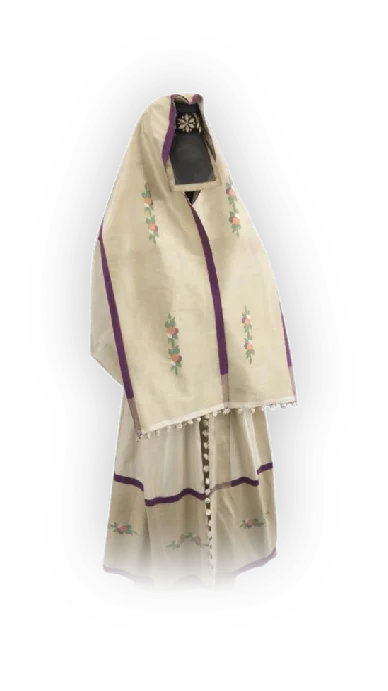
Maimonides wrote in Egypt in the twelfth century. Where women wore a full outer wrap, the husband had to provide one. He also rules that a wife who goes out in only a kerchief, without the wrap "like all other women", breaks the custom of Jewish women.7
איזו היא דת יהודית הוא מנהג הצניעות שנהגו בנות ישראל ואלו הם הדברים שאם עשתה אחת מהם עברה על דת יהודית יוצאת לשוק או למבוי מפולש או בחצר שהרבים בוקעים בו וראשה פרוע ואין עליה רדיד ככל הנשים אע"פ ששערה מכוסה במטפחות
What is the Jewish custom? It is the custom of modesty that the daughters of Israel have practised. These are the things by which a woman transgresses it: she goes out to the market, or to an open alley, or into a courtyard through which many pass, with her head uncovered, and without a shawl like all the women, even though her hair is covered with kerchiefs …8
— Shulchan Arukh, Even HaEzer 115:4
כיון שצריכות לכסות השערות מצד הדין [ויש בזה איסור תורה מדכתיב ופרע את ראש האשה מכלל שהיא מכוסה] וגם כל בנות ישראל המחזיקות בדת משה נזהרות מזה מימות אבותינו מעולם ועד עתה … ולא בא למעט רק בתולות שמותרות לילך בראש פרוע
… since they are required by law to cover their hair (and there is a Torah prohibition in this, as it is written "and he shall uncover the head of the woman", which implies that it was covered); and all the daughters of Israel who hold fast to the religion of Moses have been careful about this from the days of our forefathers until now … It excludes only unmarried girls, who are permitted to go with uncovered heads.9
— Mishnah Berurah 75:10
Further sources
- Sifrei Bamidbar 11: Rabbi Yishmael derives from Numbers 5:18 "an exhortation for the daughters of Israel to cover their hair".10
- Jerusalem Talmud, Ketubot 7:6: the rule is stricter in the street than in a private courtyard.11
- Mishnah Bava Kamma 8:6: a man who uncovers a woman’s head in the market must pay her four hundred zuz.12
- Tur, Even HaEzer 115; Shulchan Arukh, Even HaEzer 21:2 and Orach Chayim 75:2: repeat the rule, and the distinction between married and unmarried women.13
B – Christianity
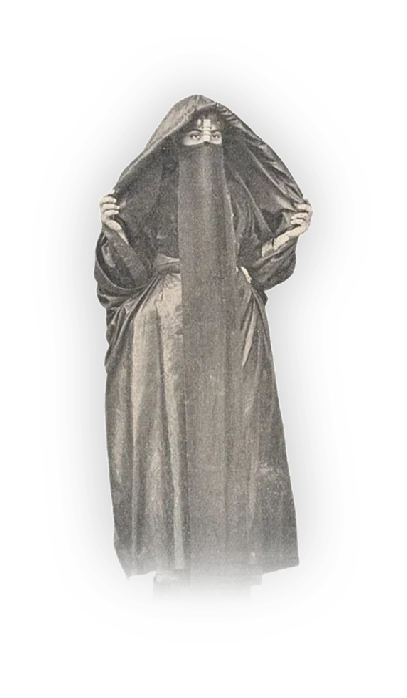
In brief. Paul commands women to cover their heads at prayer. The Church Fathers extend this to public life, and the church orders of Syria tell women to veil their faces from strange men. The canon law of the Latin Catholic Church required a covered head in church until 1983. Limits: At Corinth women were praying uncovered, which is why Paul wrote. The Fathers’ repeated complaints show that many women ignored them, and nearly three quarters of late antique portrait statues of women show no head covering. Most churches today have dropped the practice, and why Paul gave the rule is still debated.14
1. The New Testament
πᾶσα δὲ γυνὴ προσευχομένη ἢ προφητεύουσα ἀκατακαλύπτῳ τῇ κεφαλῇ καταισχύνει τὴν κεφαλὴν αὐτῆς· ἓν γάρ ἐστιν καὶ τὸ αὐτὸ τῇ ἐξυρημένῃ. εἰ γὰρ οὐ κατακαλύπτεται γυνή, καὶ κειράσθω· εἰ δὲ αἰσχρὸν γυναικὶ τὸ κείρασθαι ἢ ξυρᾶσθαι, κατακαλυπτέσθω.
But every woman that prayeth or prophesieth with her head uncovered dishonoureth her head: for that is even all one as if she were shaven. For if the woman be not covered, let her also be shorn: but if it be a shame for a woman to be shorn or shaven, let her be covered.15
— 1 Corinthians 11:5–6
2. The Church Fathers
Sciant, quia totum caput mulier est; limites et fines eius eo usque porriguntur, unde incipit vestis; quantum resoluti crines occupare possunt, tanta est velaminis regio, ut cervices quoque ambiantur … Iudicabunt vos Arabiae feminae ethnicae, quae non caput, sed faciem quoque ita totam tegunt, ut uno oculo liberato contentae sint dimidiam frui lucem quam totam faciem prostituere.
Let them know that the whole head constitutes “the woman.” Its limits and boundaries reach as far as the place where the robe begins. The region of the veil is co-extensive with the space covered by the hair when unbound; in order that the necks too may be encircled … Arabia’s heathen females will be your judges, who cover not only the head, but the face also, so entirely, that they are content, with one eye free, to enjoy rather half the light than to prostitute the entire face.16
— Tertullian, On the Veiling of Virgins 17
Tertullian, writing around 207 CE, addresses married women in Carthage and shames them with the example of pagan Arabian women. His description is rhetorical, but it agrees with the Mishnah’s independent report that "Arab women go out veiled" (see C.4).
From the Greek
Woman and man are to go to church decently attired … Let the woman observe this, further. Let her be entirely covered, unless she happen to be at home. For that style of dress is grave, and protects from being gazed at. And she will never fall, who puts before her eyes modesty, and her shawl; nor will she invite another to fall into sin by uncovering her face.17
— Clement of Alexandria, The Instructor 3.11
From the Greek
It follows that being covered is a mark of subjection and authority. For it induces her to look down and be ashamed and preserve entire her proper virtue. … For if one ought not to have the head bare, but everywhere to carry about the token of authority, much more is it becoming to exhibit the same in our deeds.18
— John Chrysostom, Homilies on 1 Corinthians 26
Nisi quod capillos nudare feminas, quas etiam caput velare Apostolus iubet, nec maritatas decet.
… except that it is not becoming even in married women to uncover their hair, since the apostle commands women to keep their heads covered.19
— Augustine, Letter 245
3. The church orders of Syria
From the Syriac
And when thou walkest in the street, cover thy head with thy robe, that by reason of thy veil thy great beauty may be hidden. And adorn not thy natural face; but walk with downcast looks, being veiled. … For if thou coverest thy face from strange men with a veil of modesty, how then canst thou go in with strange men to a bath?20
— Didascalia Apostolorum 3
The Apostolic Constitutions, compiled in Syria around 380, repeat this teaching: "if she is to veil her face, and conceal it with modesty from strange men, how can she bear to enter naked into the bath together with men?"21
4. The later Church
… nisi quod capillos nudare feminas, quas etiam caput velare apostolus iubet, nec maritatas decet. In quo tamen possent aliquae a peccato excusari, quando hoc non fieret ex aliqua vanitate, sed propter contrariam consuetudinem, quamvis talis consuetudo non sit laudabilis.
“… except that it is unbecoming for women though married to uncover their hair, since the Apostle commands them to cover the head.” Yet in this case some might be excused from sin, when they do this not through vanity but on account of some contrary custom: although such a custom is not to be commended.22
— Thomas Aquinas, Summa Theologiae II-II, q. 169, a. 2
From the Latin
“She is subject,” says he, “let her then wear a token of subjection.” In the term power, there is an instance of metonymy, for he means a token by which she declares herself to be under the power of her husband; and it is a covering, whether it be a robe, or a veil, or any other kind of covering.23
— John Calvin, Commentary on 1 Corinthians 11:10
… mulieres autem, capite cooperto et modeste vestitae, maxime cum ad mensam Dominicam accedunt.
… women, however, shall have a covered head and be modestly dressed, especially when they approach the table of the Lord.24
— Code of Canon Law (1917), canon 1262 §2
The 1917 Code bound the Latin (Western) Catholic Church until the new Code of 1983, which no longer contains the rule.
Further sources
- 1 Corinthians 11:10, 13–16: "for this cause ought the woman to have power on her head because of the angels … her hair is given her for a covering."25
- Tertullian, On the Veiling of Virgins 2 and On Prayer 22: most churches of Greece veil their virgins; "why do you denude before God what you cover before men?"26
- Chrysostom, Homilies on 1 Corinthians 26.2: praying uncovered at Corinth was "a Grecian custom".27
- Synod of Gangra (c. 340), canon 17: condemns women who cut off the hair "which God gave her as the reminder of her subjection".28
- Aquinas, Commentary on 1 Corinthians 11, lecture 2: it is "suitable to women that they use an artificial covering for the head more than men".29
C – The Ancient Civilizations
1. Mesopotamia
In brief. The Middle Assyrian Laws (c. 14th–11th century BCE) required married women, widows and free Assyrian women to cover their heads in the street. A man made his concubine a wife by veiling her before witnesses. Brides were also veiled at Mari and Ebla, and among the Hittites. Limits: Slave women and prostitutes were forbidden to veil. No Sumerian word for the veil is known, and for Babylonia there is "little or no ancient textual proof for the veiling of women on a regular basis". The Assyrian laws "stand, for the moment, in splendid isolation", and legal documents of the same period show women acting with much more freedom than the laws suggest.30
From the Akkadian
If the wives of a man, or the daughters of a man go out into the street, their heads are to be veiled. The prostitute is not to be veiled. Maidservants are not to veil themselves. Veiled harlots and maidservants shall have their garments seized and 50 blows inflicted on them and bitumen poured on their heads.31
— Middle Assyrian Laws, Tablet A §40
2. Persia
In brief. Greek writers agree that the royal women and concubines of Achaemenid Persia travelled in closed, curtained carriages and were kept from the sight of men. Limits: There is no evidence of actual veils in this period. Herodotus says Persian men brought their wives to banquets, and Queen Stateira rode with her curtains open so that ordinary women could greet her. Nearly all of this evidence comes from Greek outsiders. In later Sasanian art, women other than royal figures "appear most often … as musicians or dancers … but their heads are rarely covered".32
ἁρμαμάξας τε ἅμα ἤγοντο, ἐν δὲ παλλακὰς καὶ θεραπηίην πολλήν τε καὶ εὖ ἐσκευασμένην
They also brought carriages bearing concubines and many well-equipped servants …33
— Herodotus, Histories 7.83
From the Greek
… for the Barbarian folk are terribly jealous in all that pertains to the pleasures of love, so that it is death for a man, not only to come up and touch one of the royal concubines, but even in journeying to go along past the waggons on which they are conveyed.34
— Plutarch, Life of Artaxerxes 27
3. Greece and Rome
In brief. Covering the head was the norm for respectable married women in the Greek world and in Rome. Limits: Unmarried Spartan girls went unveiled, though married Spartan women were veiled. How common face veiling was among the Greeks is debated, since most images show the face.35
From the Greek
Why do sons cover their heads when they escort their parents to the grave, while daughters go with uncovered heads and hair unbound? … Or is it that the unusual is proper in mourning, and it is more usual for women to go forth in public with their heads covered and men with their heads uncovered?36
— Plutarch, Roman Questions 14
4. Arabia before Islam
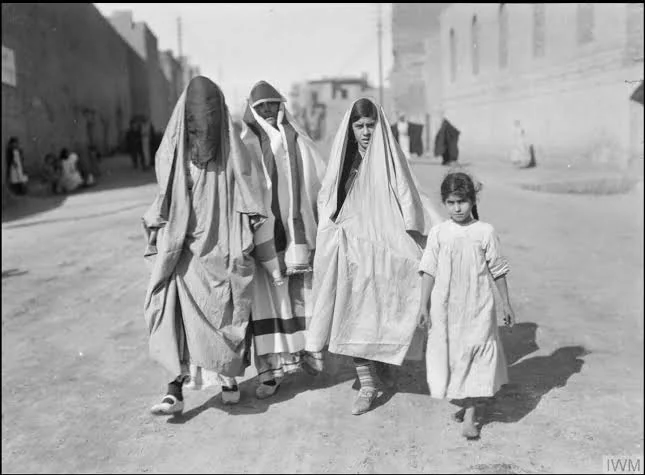
In brief. Two independent sources of about 200 CE, the Mishnah and Tertullian (see B.2), report that Arabian women went out veiled. Tertullian adds that they covered the whole face except one eye. Limits: Both sources are outsiders, and neither names the tribes or regions. Modern study describes head coverings in pre-Islamic Arabia as worn "specifically by upper-class women as a sign of honour and distinction".37
עַרְבִיּוֹת יוֹצְאוֹת רְעוּלוֹת, וּמָדִיּוֹת פְּרוּפוֹת
Arab women go out veiled, and Median women go out with cloaks fastened with stones.38
— Mishnah Shabbat 6:6
The Mishnah is ruling on what Jewish women may wear outdoors on the Sabbath, and it allows the women of Arabia to go out in the local veil. The Hebrew word reʿulot is usually explained as a face covering.
5. Egypt, Syria and India
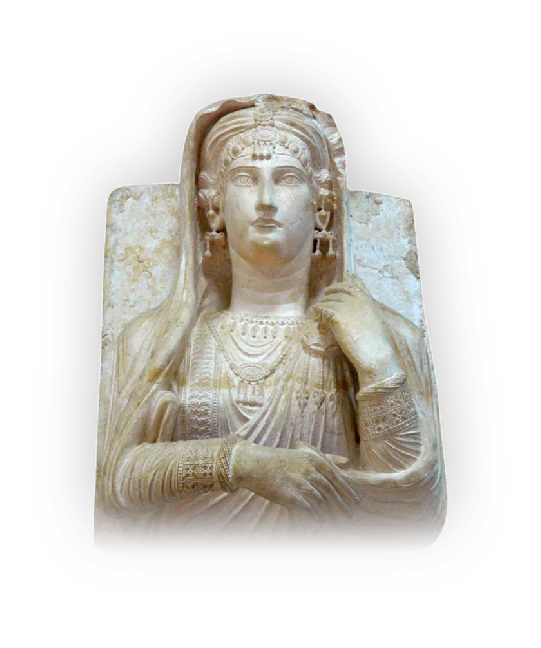
In brief. Egypt: No Egyptian law or text requiring women to veil was found, and Egyptian art regularly shows women’s faces and hair uncovered. Herodotus reports that "among them, the women buy and sell, the men stay at home and weave".39 Syria: At Palmyra, "women wearing a long cloak over their heads are depicted on numerous funerary reliefs". One first-century relief shows veils "completely covering their heads and faces", but most portraits show the face.40 India: The Sanskrit epics and grammar describe high-born women kept from public sight; a seventh-century grammar speaks of "the king’s wives, who do not see the sun".41 This is the seclusion of royal women, not a veil worn by all.
न गृहाणि न वस्त्राणि न प्राकारस्तिरस्क्रिया। नेदृशा राजसत्कारा वृत्तमावरणं स्त्रियाः॥ व्यसनेषु न कृच्छ्रेषु न युद्धेषु स्वयंवरे। न क्रतौ नो विवाहे वा दर्शनं दूष्यते स्त्रियाः॥
Not houses, nor clothes, nor walls, nor screens, nor such royal honours are a woman’s covering; her conduct is her covering. In calamities, in hardships, in war, at a bride’s choice of husband, at a sacrifice or at a wedding, it is no fault for a woman to be seen.42
— Ramayana, Yuddha Kanda 114.27–28
Rama speaks these words when Sita is brought to him in a curtained litter. The list of exceptions assumes that high-born women were normally kept from public view. Yet the first verse makes conduct, not walls or cloth, the true covering.
D – Other Cultures after the Seventh Century
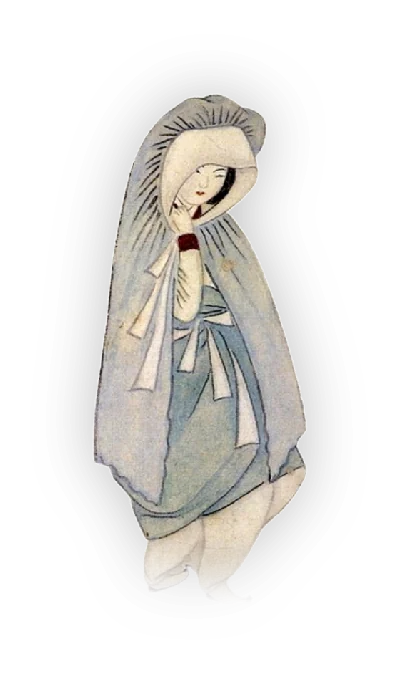
In brief. Outside Islam, face covering was required or expected of elite women in China, Korea and Japan, and of many Hindu women in North India (the ghunghat). In Catholic Spain it was a fashion. Limits: In each case the rule was aimed at the upper classes, the gentry rather than commoners. Tang court women gave up the veil within a century, and the Joseon court had to repeat its orders for seventy years. Some Indian groups, such as the Samaicha of the Thar desert, "never veil their faces".43
1. China
武德、貞觀之時,宮人騎馬者,依齊、隋舊制,多著羃䍦,雖發自戎夷,而全身障蔽,不欲途路窺之。……咸亨二年又下敕曰:「百官家口,咸預士流,至於衢路之間,豈可全無障蔽。」……開元初,從駕宮人騎馬者,皆著胡帽,靚妝露面,無復障蔽。
In the Wude and Zhenguan eras [618–649], palace women who rode on horseback mostly wore the mili, following the old practice of the Qi and Sui dynasties. Although it came from the western peoples, it screened the whole body, so that they would not be looked at on the road. … In 671 an edict said: “The families of officials all belong to the gentry; how can they be entirely unscreened in the streets?” … At the start of the Kaiyuan era [713], palace women riding in the emperor’s train all wore foreign hats, with made-up and uncovered faces, with no screening at all.44
— Old Book of Tang, juan 45
婦人有故出中門必擁蔽其面〈如葢頭面帽之類〉……女僕無故不出中門有故出中門亦必擁蔽其面〈雖小婢亦然〉
When a wife has reason to go out of the middle gate, she must cover her face (with something like a head veil or a face hat). … Female servants do not go out of the middle gate without reason; if they have reason to, they too must cover their faces (even little maids).45
— Zhu Xi, Family Rituals, juan 1
Zhu Xi’s Family Rituals became the standard household manual of late imperial China, Korea and Vietnam. Its rule restates the classical Book of Rites: "when a woman goes out of the gate, she must cover her face". It describes the ideal of elite households, not what every woman did.
2. Korea
一, 婦人出入, 必擁蔽其面, 毋得褰笠帽。 …… 上覽之曰: "惟毋用粳米、婦人蔽面二事可行"
“One: when women go in and out, they must cover their faces, and may not lift up the veil of their hats.” … The king read it and said: “Only the two matters of not using polished rice and of women covering their faces should be carried out.”46
— Veritable Records of the Joseon Dynasty, 1412
本朝士族婦女, 出必蔽面乘輿, 古今之禁防至嚴, 非閭巷婦女之比也。
In our dynasty, women of gentry families must cover their faces and ride in a litter when they go out. Past and present, the restrictions on them are very strict, unlike those for commoner women of the lanes.47
— Veritable Records of the Joseon Dynasty, 1433
The two orders show the rule aimed at women of the gentry. Commoner women of the lanes were held to a lighter standard.
3. Japan
上臈だちしは輿にのり、その余はいづれも乗懸馬に茜染の蒲団敷きて乗り、市女笠の下に、ふくめむして供奉する事なり、……御前近く侍ふ女房共が、馬上に顔面をあらはすも、あまり失体なれば
The high-ranking ones rode in palanquins, and the rest rode packhorses spread with madder-dyed cushions, attending him with a face cloth under their ichime-gasa hats. … [His minister said:] “It is a great impropriety for the ladies who serve close to Your Lordship to show their faces on horseback.”48
— Tokugawa jikki, on Tokugawa Ieyasu (c. 1600)
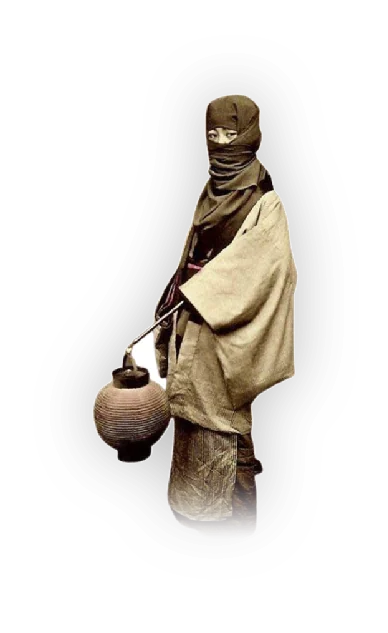
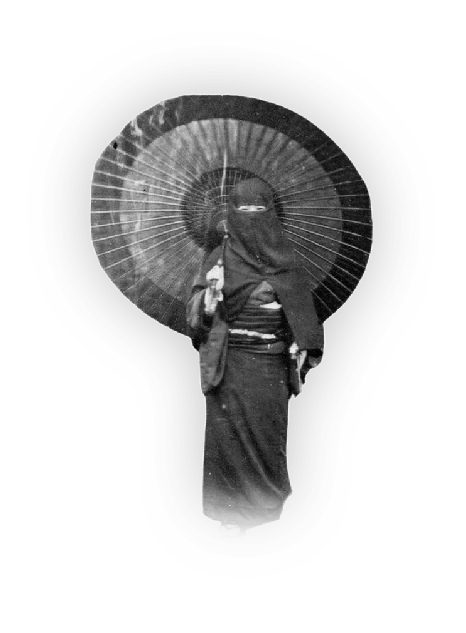
The passage concerns the ladies who attended the ruler, not ordinary women. Japanese women also wore hoods that covered the head and face except the eyes, mostly in winter.
4. India and Spain
चितई ललचौहैं चखनु डटि घूँघट-पट माँह। छल सौं चली बुवाइ कै छिनकु छबीली छाँह॥
From within the cloth of her ghunghat she looked at me steadily, with longing eyes; then, on some pretext, the pretty one walked away, letting her shadow touch me for a moment.49
— Bihari, Satsai, doha 12
This is love poetry from a seventeenth-century Hindu court, not a rule. But it takes for granted that the woman’s face is covered and that she looks out from under it.
Quiso Dios que llegaron a la tienda dos de las que piden prestado sobre sus caras, tapadas de medio ojo, con su vieja y pajecillo.
As God willed, two of those women who borrow on the strength of their faces came to the shop, veiled so that only one eye showed, with their old chaperone and their little page.50
— Quevedo, El Buscón III.2 (1626)
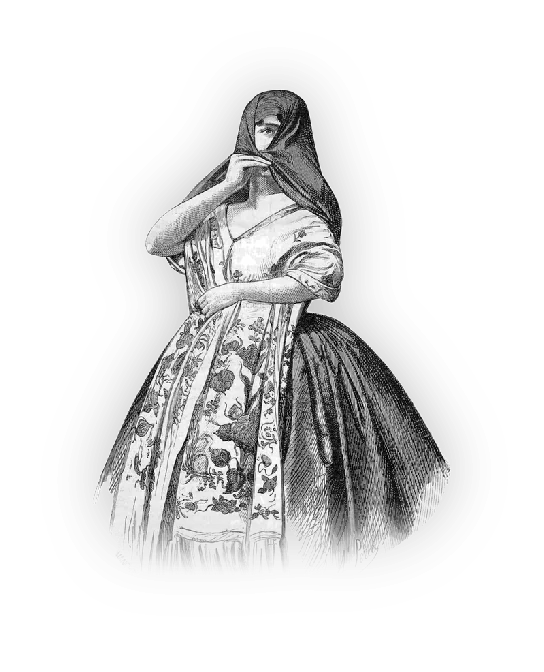
Quevedo is writing satire, but the tapada was real: a fashion of Seville, Madrid and Lima that the Crown tried repeatedly to ban.
Further sources
- Joseon records of 1404, 1414, 1430 and 1471: repeated orders that gentry women cover their faces, and complaints that they lifted their veils.51
- Yoshida Kenkō, Tsurezuregusa §70 (c. 1330): a woman in the kinukazuki, a robe drawn over the head, explained by the editor as "a woman who hid her face".52
- James Tod, Annals of Rajasthan (1829–32): the seclusion of Rajput women, and the dopatta "occasionally thrown over the head as a veil".53
- Vélez de Guevara, El diablo cojuelo (1641): "women in mantos, with one eye showing" at a literary academy in Seville.54
In Sum
- Covering the head was the normal mark of a respectable married woman in Judaism and Christianity, and among the Assyrians, Greeks and Romans, long before Islam.
- Covering the face is attested before Islam in Arabia and in the church orders of Syria, and later among the elites of China, Korea, Japan, North India and Spain.
- In almost every culture the practice depended on status: free or slave, married or unmarried, noble or common. Islamic law makes similar distinctions, between free and slave women, and for older women.
- It was never universal: Egyptian women traded in the market, Spartan girls went bareheaded, Tang court women gave up the veil, and many women ignored the rules.
- Covering is therefore a shared human practice of modesty, not something Islam invented. The evidence does not show that Islam took it from any one of these cultures.
And Allah is the One who truly has the Knowledge
and may Allah send His blessings on Muhammad
and his family and companions.
[End of Booklet]
Bibliography
The Qur’an
- Qur’an 24:31 and 33:59, trans. M. A. S. Abdel Haleem, The Qur’an: A New Translation. Ed. Oxford University Press. quran.com/24/31
Jewish Sources
- Mishnah Ketubot 7:6. Ed. Torat Emet; William Davidson Edition. sefaria.org/Mishnah_Ketubot.7.6
- Babylonian Talmud, Ketubot 72a–b. sefaria.org/Ketubot.72a.19
- Babylonian Talmud, Ketubot 72b. sefaria.org/Ketubot.72b.1-2
- Babylonian Talmud, Nedarim 30b. sefaria.org/Nedarim.30b
- Mishnah Bava Kamma 8:6. sefaria.org/Mishnah_Bava_Kamma.8.6
- Mishnah Shabbat 6:6. sefaria.org/Mishnah_Shabbat.6.6
- Numbers 5:18. sefaria.org/Numbers.5.18
- Sifrei Bamidbar 11. sefaria.org/Sifrei_Bamidbar.11
- Jerusalem Talmud, Ketubot 7:6. Trans. H. W. Guggenheimer. Ed. De Gruyter. sefaria.org/Jerusalem_Talmud_Ketubot.7.6
- Maimonides, Mishneh Torah, Ishut 13:11. Trans. E. Touger. Ed. Moznaim. sefaria.org/Mishneh_Torah,_Marriage.13.11
- Maimonides, Mishneh Torah, Ishut 24:12. sefaria.org/Mishneh_Torah,_Marriage.24.12
- Jacob ben Asher, Tur, Even HaEzer 115. Ed. Vilna 1923. sef aria.org/Tur,_Even_HaEzer.115
- Joseph Karo, Shulchan Arukh, Even HaEzer 115:4. Ed. Lemberg 1886. sefaria.org/Shulchan_Arukh,_Even_HaEzer.115.4
- Joseph Karo, Shulchan Arukh, Even HaEzer 21:2. sefaria.org/Shulchan_Arukh,_Even_HaEzer.21.2
- Joseph Karo, Shulchan Arukh, Orach Chayim 75:2. sefari a.org/Shulchan_Arukh,_Orach_Chayim.75.2
- Israel Meir Kagan, Mishnah Berurah 75:10. sefaria.org/Mishnah_Berurah.75.10
Christian Sources
- 1 Corinthians 11. Nestle–Aland 28th ed. Ed. Deutsche Bibelgesellschaft. die-bibel.de/en/bible/NA28/1CO.11
- Tertullian, De virginibus velandis 17. Ante-Nicene Fathers 4. bkv.unifr.ch/works/cpl-27/compare/on-the-veiling-of-virgins/18/de-virginibus-velandis
- Tertullian, De oratione 22. Ed. E. Evans. bkv.unifr.ch/works/cpl-7/versions/on-prayer/divisions/23
- Clement of Alexandria, Paedagogus 3.11. Ante-Nicene Fathers 2. newadvent.org/fathers/02093.htm
- Didascalia Apostolorum. Trans. R. H. Connolly. Ed. Clarendon Press, 1929. bombaxo.com/the-didascalia-apostolorum/
- Apostolic Constitutions 1.8–9. Ante-Nicene Fathers 7. ne wadvent.org/fathers/07151.htm
- John Chrysostom, Homilies on 1 Corinthians 26. Nicene and Post-Nicene Fathers 1/12. bkv.unifr.ch/works/cpg-4428-1/versions/homilies-of-st-john-chrysostom-on-the-first-epistle-of-st-paul-the-apostle-to-the-corinthians/divisions/274
- Augustine, Letter 245 (Latin). scholarly.romanletters.org/letters/augustine_hippo/245/
- Augustine, Letter 245 (English). newadvent.org/fathers/1102245.htm
- Synod of Gangra, canon 17. Nicene and Post-Nicene Fathers 2/14. newadvent.org/fathers/3804.htm
- Thomas Aquinas, Summa Theologiae II-II q. 169 a. 2 (Latin). bkv.unifr.ch/works/sth/versions/summa-theologiae/divisions/2821
- Thomas Aquinas, Summa Theologiae II-II q. 169 a. 2 (English). newadvent.org/summa/3169.htm
- Thomas Aquinas, Super I Cor. c. 11 lect. 2. Trans. F. Larcher. aquinas.cc/la/en/~1Cor.C11.L2
- John Calvin, Commentary on 1 Corinthians. Trans. J. Pringle. ccel.org/ccel/calvin/calcom39.xviii.i.html
- Codex Iuris Canonici (1917), canon 1262 (E. Peters). cano nlaw.info/2006/09/vatican-ii-canon-1262-and-chapel-veils.html
Ancient Sources
- Middle Assyrian Laws, Tablet A. Fordham Ancient History Sourcebook. sourcebooks.web.fordham.edu/ancient/1075assyriancode.asp
- Herodotus, Histories 7.83 (Greek). perseus.tufts.edu/hopper/text?doc=Perseus:text:1999.01.0125:book=7:chapter=83
- Herodotus, Histories 7.83 (English). perseus.tufts.edu/hopper/text?doc=Perseus:text:1999.01.0126:book=7:chapter=83
- Herodotus, Histories 2.35 and 5.18. Trans. A. D. Godley. p erseus.tufts.edu/hopper/text?doc=Perseus:text:1999.01.0126:book=2:chapter=35
- Plutarch, Artaxerxes 5 and 27. Trans. B. Perrin. perseus.tufts.edu/hopper/text?doc=Plut.+Art.+27
- Plutarch, Roman Questions 14. Trans. F. C. Babbitt. penelo pe.uchicago.edu/Thayer/E/Roman/Texts/Plutarch/Moralia/Roman_Questions*/A.html
- Plutarch, Sayings of Spartans. Trans. F. C. Babbitt. penelop e.uchicago.edu/Thayer/E/Roman/Texts/Plutarch/Moralia/Sayings_of_Spartans*/main.html
- Valmiki, Ramayana, Yuddha Kanda 114. sa.wikisource.org/wiki/ / / _ रामायणम् युद्धकाण्डम् सगः ११४
- Kashikavritti on Panini 3.2. sa.wikisource.org/wiki/ /का शका _/ _ तृतीयोऽध्यायः तीयः पादः
Later Sources
- Liji, “Nei ze”. zh.wikisource.org/wiki/禮記/內則
- Liu Xu et al., Jiu Tang shu, juan 45. zh.wikisource.org/wiki/舊唐書/卷45
- Zhu Xi, Jiali, juan 1. Ed. Siku quanshu. zh.wikisource.org/wiki/家禮_(四庫全書本)/卷1
- Joseon wangjo sillok, 1412. sillok.history.go.kr/id/kca_11211014_001
- Joseon wangjo sillok, 1433. sillok.history.go.kr/id/kda_11512004_006
- Joseon wangjo sillok, 1404. sillok.history.go.kr/id/kca_10405025_003
- Joseon wangjo sillok, 1414. sillok.history.go.kr/id/kca_11411017_001
- Joseon wangjo sillok, 1430. sillok.history.go.kr/id/kda_11208015_003
- Joseon wangjo sillok, 1471. sillok.history.go.kr/id/kia_10205020_004
- Tokugawa jikki, Tōshōgū go-jikki furoku 24. ja.wikisource.org/wiki/東照宮御実紀附録/巻廿四
- Yoshida Kenkō, Tsurezuregusa. ja.wikisource.org/wiki/徒然草_(校註日本文學大系)
- Bihari, Satsai, in Bihari-ratnakar (1926). hi.wikisource.org/wiki/ - /बहार रत्नाकर १
- James Tod, Annals and Antiquities of Rajasthan, ed. W. Crooke, vol. 2. Ed. Oxford University Press, 1920. gute nberg.org/ebooks/57375
- James Tod, Annals and Antiquities of Rajasthan, ed. W. Crooke, vol. 3. gutenberg.org/ebooks/57376
- Francisco de Quevedo, El Buscón III.2. es.wikisource.org/wiki/Historia_de_la_vida_del_Buscón/Libro_Tercero:_Capítulo_II
- Luis Vélez de Guevara, El diablo cojuelo IX. es.wikisource.org/wiki/El_diablo_cojuelo/IX
Academic Studies
- F. M. Fales, H. D. Galter, M. G. Biga, in Headscarf and Veiling: Glimpses from Sumer to Islam. Ed. Edizioni Ca’ Foscari, 2021. edizionicafoscari.unive.it/en/edizioni4/libri/978-88-6969-522-3/veiling-in-ancient-near-eastern-legal-contexts/
- G. Stafford, “Veiling and Head-Covering in Late Antiquity”, Past & Present 263 (2024). academic.oup.com/past/article/263/1/3/7516952
- J. R. Russell, “Čādor ii. Among Zoroastrians”, Encyclopaedia Iranica 4/6. iranicaonline.org/articles/cador/cador-garment-ii-among-zoroastrians/
- B. Gheiby, “Čādor i. In Early Literary Sources”, Encyclopaedia Iranica 4/6. iranicaonline.org/articles/cador/cador-garment-i-in-early-literary-sources/
- L. Llewellyn-Jones, Aphrodite’s Tortoise. Ed. Classical Press of Wales, 2003. orca.cardiff.ac.uk/id/eprint/88428/
This publication is a waqf, a charitable endowment made for the sake of Allah and for the benefit of all Muslims. It is not to be sold, traded, or used for worldly gain. Whoever wishes to print, copy, or distribute it free of charge may do so, provided that it is reproduced in full and without any alteration to the original text. Translations into other languages are permitted, provided that they are faithful to the original and name it as their source. First published in 2026. Published by Maktabah Wasatiyyah.